Cluedoku
Britain’s most popular murder-mystery-themed logic-based number-placement puzzle. Was it Colonel Mustard with the lead piping? Can the six go next to the four in the corner?
Monotony
Players travel round the board paying imaginary rents with imaginary money, winning second place in imaginary beauty contests, and occasionally landing in imaginary jail. This repeats for several hours until the youngest player faces imaginary bankruptcy, and liquidates their imaginary assets.
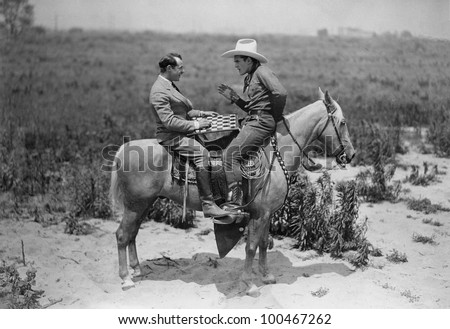
Horseback Chess
Chess, but played on the back of a wild stallion. Galloping optional.
Scrbbl
Much like ‘Scrabble’, but with all the vowels removed.
Oedipus: The boardgame
Fun for all the family. Except dad.
Thursday, 12 July 2012
Monday, 9 July 2012
Life on the Rising Limb (extended)
The year was 1878, in that awkward in-between phase between the invention of the car and the invention of the petrol engine. Everyone owned one, but kept it in their stables and couldn’t really see the point.
I was aboard ‘The Rising Limb’, a scientific research vessel twice as high as it was wide, half as wide as it was deep, and built by someone who had got the plans the wrong way around. Said ship-maker had tried to conceal his error by floating the vessel the “right” way up. This wasn’t an ideal fix; it had the unfortunate side effect of turning all of the corridors into chutes, the chandeliers into wall hangings, and the kitchens into death-traps, with open hearths forming the floor. Besides, since the boat was constructed, and the sails installed, vertically, she now had to be tugged by an upright boat. Unfortunately, the Captain had not been informed of the ship’s rather unique architecture and so, when he came aboard to survey the vessel he fell down – or should that be through? – the corridor, coming to an abrupt stop on the wall of his office. His leg was broken, and replaced with a rather fetching wooden model.
The Captain, in pain and concussed, stumbled out of the medical bay and onto the deck. “Hoist the cannons! Polish the rigging! Prime the mainbrace!” Although he was concussed he was still our captain, so we obliged. We were just hoisting the cannons when the – freshly polished – rope snapped. The cannons crashed to the deck, raining down like large, predominantly brass raindrops. The captain, unable to run for cover on account of his new wooden leg, found his hand pinned to the deck. He passed out instantly, and was carried to the medical bay, where the ship’s doctor fitted him with a metal hook.
The Captain lost his eye the next morning; he awoke and rubbed the sleep from his eyes – unaware of the hook.
--
It was two days before we were due to set sail. We were still waiting upon the arrival of Doctor Cross and Doctor Monk. As I mentioned in passing, we were a scientific vessel, set to collect specimens from the island of Santa Rosalia. Doctor Cross’ reputation preceded him. He had sent a telegraph. He was known for his unusual choice of headwear, expertise on the reptiles of the equator, and vile (and violent) temper.
Smith, the ship’s geologist, and I were arguing over who should greet him. We couldn’t decide who would expose themselves to this volatile man; I argued that the ship wouldn’t get very far without an engineer, so I should be saved. Smith contested that he had a wife and kids at home. I countered that they weren’t his, and he really should return them at some point. Having hostages shouldn’t mean that you are automatically safe. In the end I flipped a coin and, while Smith was distracted, punched him on the nose. He agreed to greet Cross.
When we went up on deck there was an enormous man, almost as wide as he was tall, with a thick, bushy beard, and darting eyes. He looked like his mother had been a bear, and his father had also been a bear. He was a bear. He stepped aside and Doctor Cross introduced himself; “Good morning, fellows” he said. “Is it okay if I bring aboard my pet bear?”
It was not an ideal situation; I was inclined to say no, but then we weren’t going to say no to someone with a pet bear. But, then again, if we said no, there would be no pet bear. So we’d be safe. It was one of those terrible logical quandaries. In the end, we reasoned that the bear could stay; that Doctor Cross had managed to get it across the gangway deserved some form of recognition.
In hindsight, we probably should have told the captain about the bear.
--
The last of our crew to arrive was Doctor Everest Monk. Our mission was to collect specimen samples, and no-one was better at trapping animals than Doctor Monk. He was an ingenious inventor, and had made his fortune from perforated bread (the best thing since sliced) and double-sided paper. He demanded to see the captain, so we gathered some rope and lowered him down to the captain’s office.
It should, at this point, be explained that a man doesn’t lose an eye without any minor repercussions; a complete loss of depth perception, for example. And so it was that when Monk and I arrived in the Captain’s office, we found him in the process of spreading the navigational charts with marmalade, buttering his compass, and writing a letter home on some toast. “Ah, Monk,” he called to the doctor. “What a pleasant surprise to see you.” He made to get up, but Monk gestured him to sit. “Would you perhaps like a cup of tea?”
“Yes, Captain, that would be lovely” Monk replied. Monk sat down, and the Captain set a teacup before him. The Captain retrieved a teapot from his desk, and proceeded to pour the scalding hot liquid down Monk’s front. To Monk’s credit, he did not flinch. He did scream though.
After regaining his composure, Monk spoke up. “I was wondering, Captain, whether we might speak in private.”
“We are in Private.”
“No, sir, I meant without” – he gestured towards me.
“Oh!” the Captain exclaimed. “I didn’t see you there. Would you like some tea?”
“No!” I shouted, rather too loudly and quickly. Monk shot me a furtive glance. I like furtive glances; they’re my favourite type of biscuit. I left without complaint. As I ascended the rope back to the deck, I heard some snatches of conversation.
“unique opportunity... you will agree... enormous amounts of gold... collateral damage... the men ... for the best.” And then, somewhat ominously, the Captain’s voice “It is agreed”.
--
We sailed for weeks without Incident - before realising he had been left at port. It didn’t really matter, though. Incident’s role was as a deck-cleaner, and now that they were all vertical, there was no real call for him. Also, we could store the bear in his cabin.
What was worrying, however, was Smith’s disappearance. He hadn’t been seen since the six hour charades game of the night before. Our games don’t usually last so long, but the captain guessed correctly and then it was his turn to act. It turns out it’s quite hard to play charades when you have hooks instead of hands.
I was searching the deck for Smith, when I ran into Monk, dragging a large sack across the wooden planking. “Have you seen Smith?” I asked.
“No,” he replied, “and he certainly hasn’t been murdered, and his body’s definitely not in this sack.” There was something suspicious about this, but I couldn’t quite put my finger on it. “How about you try his cabin?” Monk suggested, pointing in the direction of Smith’s lodgings. As he pointed, he let go, momentarily, of the sack. Due to the tilt of the deck, it fell, barrelling into the captain’s back, and coming to rest in a heap on his shoulders.
The ship’s doctor did a great job on the bandaging.
--
Over the next few days, other members of the crew started to disappear.
First there was Cross, who went up into the crow’s nest and never came down, then there was Timpson, who was tragically cut loose from his support rope on the main deck, and Sargent, caught in a terrible accident accident. Something didn’t feel right. I kept thinking back to that meeting with Monk on the deck. Something about what he had said was unusual. The phrasing of it had seemed so strange, so stilted. Then it struck me, hard, like a funny metaphor.
I abseiled to Monk’s cabin, and burst in “You, sir.” I pointed my finger accusingly. “I know your dirty secret. You thought you could hide it from me, with your burlap sack, and your offer of help, but to no avail.” I paused here, dramatically, “You, sir, are a Frenchman”. But instead of gasping and crying ‘sacrĂ© bleu’, as I had expected, he began to laugh. It was a rasping, panting laugh, like the sound of a thousand pugs trying to catch their breath, or a very old steam engine, or a hundred pugs catching their breath on a relatively new steam engine.
“You don’t understand, do you?” he said, wiping the tears of laughter from your eyes. “I was worried there, for a second. But I might as well tell you the truth, my true secret. If all goes to plan, it’s not as if you’ll be able to tell anyone. I am the reason that the crew are dead”.
“How?”
“I killed them”.
“But why?”
“Because I intend to turn The Rising Limb into a ghost ship. Scientific voyages just aren’t profitable. People aren’t interested in science unless it can help them to lose weight.”
“What about Darwin, The Origin of Species?”
“It says it’s okay to be fat, because you stand a better chance of survival”.
“Newton’s treatises?”
“Gravity, and mass, are out of your control.”
“Einstein’s theory of relativity?”
“You’re relatively slim.”
“Oh.”
“Yes. Now if you’ll just go quietly,” he said, reaching for his sword, “the captain is taking care of Incident, then we may return to London.”
“But Incident never- ” I started, before we heard the Captain’s scream.
There wasn’t much the ship’s doctor could do this time.
--
Epilogue
Monk did end up setting up his own ghost boat. Unfortunately, he forgot to remove the bear from Incident’s cabin, so over time the number of ghosts built up, until he was done by the RSPCG for owning over 100 with no breeding licence.
The surprisingly effeminate cabin boy, who escaped the ordeal by hiding beneath the Captain’s desk, grew into a surprisingly effeminate man.
Smith’s son back in England grew up to write biographies for epilogues. They are brilliant, and he’s a very talented young man.

Friday, 6 July 2012
A Recipe for Disaster
100g flour
175g caster sugar
3 politicians
4 eggs
1 badger
2 tiny pairs of brogues
Half a teaspoon of baking powder
Half a teaspoon of uranium
Alternatively, if you’re on a low sodium diet, omit one of the politicians and substitute an apple (with a gift tag reading ‘to the most beautiful’).
175g caster sugar
3 politicians
4 eggs
1 badger
2 tiny pairs of brogues
Half a teaspoon of baking powder
Half a teaspoon of uranium
Alternatively, if you’re on a low sodium diet, omit one of the politicians and substitute an apple (with a gift tag reading ‘to the most beautiful’).
Thursday, 5 July 2012
Families
Families are a lot like French cheeses; there are a lot of them, and almost all are unpleasant.
Families are a lot like nuclear missiles; you make a big fuss when they leave, but you genuinely don’t want them to return.
Families are a lot like scented candles; they don’t fare well in house fires.
Families are a lot like nuclear missiles; you make a big fuss when they leave, but you genuinely don’t want them to return.
Families are a lot like scented candles; they don’t fare well in house fires.
Wednesday, 4 July 2012
Yours sincerely, That Cyclist
To the motorist I met this morning,
I am writing to apologise for our brief and unfortunate meeting.
It could have been averted if only there were some way for drivers to indicate their desire to turn. I don’t know, perhaps a system of flashing lights? But I should give you the benefit of the doubt; after all, it’s not as if such a system comes as standard in all automobiles, and you might not have been able to afford such a complicated and exclusive system (you obviously couldn’t afford a hands-free phone set).
I am sorry for delaying your arrival to a location of great importance. I mean, it must have been an emergency; I can see no other reason for a car to drive into the bike lane in order to overtake a turning bus. If that one set of traffic lights was going to make such great difference, you must be a nuclear scientist, or a superhero, perhaps a hostage negotiator. (In which case, why did you have two children in school uniform riding in the back? Are they also hostage negotiators?)
I concede that the dents in your metalwork were definitely caused by the impact between your vehicle and my bike. Mea culpa. It was very selfish of me to limp off to the nearest open cafĂ© to wash the grit out of my cuts. I should have stayed and given you my details so as to pay for the repair work to the side of your bonnet. I mean, now you’re going to have to pay for it out of your own pocket you won’t be able to afford that system of flashing lights you were saving up for. I suppose, as consolation, you could always sell what was left of my bike for scrap; it’s not much good for riding anymore, and I hear that metal sells for quite a bit nowadays.
Perhaps it’s for the best that we didn’t exchange details. I’m of the student persuasion – I might not have been able to offer you much money, but how about a political placard? An academic diary? Some new fangles? But then, you probably wouldn’t have been able to stay and chat.
You had some hostages to save.
Yours sincerely,
That Cyclist.
I am writing to apologise for our brief and unfortunate meeting.
It could have been averted if only there were some way for drivers to indicate their desire to turn. I don’t know, perhaps a system of flashing lights? But I should give you the benefit of the doubt; after all, it’s not as if such a system comes as standard in all automobiles, and you might not have been able to afford such a complicated and exclusive system (you obviously couldn’t afford a hands-free phone set).
I am sorry for delaying your arrival to a location of great importance. I mean, it must have been an emergency; I can see no other reason for a car to drive into the bike lane in order to overtake a turning bus. If that one set of traffic lights was going to make such great difference, you must be a nuclear scientist, or a superhero, perhaps a hostage negotiator. (In which case, why did you have two children in school uniform riding in the back? Are they also hostage negotiators?)
I concede that the dents in your metalwork were definitely caused by the impact between your vehicle and my bike. Mea culpa. It was very selfish of me to limp off to the nearest open cafĂ© to wash the grit out of my cuts. I should have stayed and given you my details so as to pay for the repair work to the side of your bonnet. I mean, now you’re going to have to pay for it out of your own pocket you won’t be able to afford that system of flashing lights you were saving up for. I suppose, as consolation, you could always sell what was left of my bike for scrap; it’s not much good for riding anymore, and I hear that metal sells for quite a bit nowadays.
Perhaps it’s for the best that we didn’t exchange details. I’m of the student persuasion – I might not have been able to offer you much money, but how about a political placard? An academic diary? Some new fangles? But then, you probably wouldn’t have been able to stay and chat.
You had some hostages to save.
Yours sincerely,
That Cyclist.
Tuesday, 3 July 2012
Life on the Rising Limb
The year was 1878, in that awkward in-between phase between the invention of the car and the invention of the petrol engine. Everyone owned one, but kept it in their stables and couldn’t really see the point.
I was aboard ‘The Rising Limb’, a scientific research vessel twice as high as it was wide, half as wide as it was deep, and built by someone who had got the plans the wrong way around. Said ship-maker had tried to conceal his error by floating the vessel the “right” way up. This wasn’t an ideal fix; it had the unfortunate side effect of turning all of the corridors into chutes, the chandeliers into wall hangings, and the kitchens into death-traps, with open hearths forming the floor. Besides, since the boat was constructed, and the sails installed, vertically, she now had to be tugged by an upright boat. Unfortunately, the Captain had not been informed of the ship’s rather unique architecture and so, when he came aboard to survey the vessel he fell down – or should that be through? – the corridor, coming to an abrupt stop on the wall of his office. His leg was broken, and replaced with a rather fetching wooden model.
The Captain, in pain and concussed, stumbled out of the medical bay and onto the deck. “Hoist the cannons! Polish the rigging! Prime the mainbrace!” Although he was concussed he was still our captain, so we obliged. We were just hoisting the cannons when the – freshly polished – rope snapped. The cannons crashed to the deck, raining down like large, predominantly brass raindrops. The captain, unable to run for cover on account of his new wooden leg, found his hand pinned to the deck. He passed out instantly, and was carried to the medical bay, where the ship’s doctor fitted him with a metal hook.
The Captain lost his eye the next morning; he awoke and rubbed the sleep from his eyes – unaware of the hook.
--
It was two days before we were due to set sail. We were still waiting upon the arrival of Doctor Cross, and Doctor Wick. As I mentioned in passing, we were a scientific vessel, set to collect specimens from the island of Santa Rosalia. Doctor Cross’ reputation preceded him. He had sent a telegraph. He was known for his unusual choice of headwear, expertise on the reptiles of the equator, and vile (and violent) temper.
Smith, the ship’s geologist, and I were arguing over who should greet him. We couldn’t decide who would expose themselves to this volatile man; I argued that the ship wouldn’t get very far without an engineer, so I should be saved. Smith contested that he had a wife and kids at home. I countered that they weren’t his, and he really should return them at some point. Having hostages doesn’t automatically mean that you are safe. In the end I flipped a coin and, while Smith was distracted, punched him on the nose. He agreed to greet Cross.
When we went up on deck there was an enormous man, almost as wide as he was tall, with a thick, bushy beard, and darting eyes. He looked like his mother had been a bear, and his father had also been a bear. He looked like a bear. He stepped aside and Doctor Cross introduced himself; “Good morning, fellows” he said. “Mood fawning, gellows”.
He had just learnt of epigrams, and was trying (with limited success) to create his own. Had he explained this to the rest of the crew, they might have sympathised. But as it was, they considered him mad.
--
(tbc)
Monday, 2 July 2012
Gold (or 'An Apology')
Dear future generations,
It was 2042, the year when the BBC admitted that Bruce Forsyth had died in 1970, and what viewers saw on their sets was his taxidermied corpse being manipulated by members of the Jim Henson company. It was also the year that the metal finally ran out. Governments had seen the crisis coming for some time, lumbering over the horizon like an overweight buffalo. Indeed, they had taken the threat quite seriously; a summits was held upon the matter, with all G20 countries (except the USA) agreeing that something must definitely be seen to be done to be seen to agree on reasonable and equitable targets for aims – by March 2045. Everyone agreed that the conference had been a huge success. In the UK sandwiches were made illegal so as to save on aluminium foil. In Sweden Rayleigh switched from making bikes to unicycles.
Gold was the metal that they most wanted to conserve. Gold, with its 79 electrons, superconductivity, and extreme opacity to UV light. Space travel would only be possible there were enough gold, for superconductive wiring, effective insulation, and motivational bling. And so, in the early 2000s, the government decided to start its cash for gold programme. When this proved to be disappointingly slow, they set a new breed of alchemists the task of distilling goldfish into their constituent parts; gold, and fish. The RSPCA shortly stepped in, objecting that this was their remit.
So what was my role in this story? Well, I’m an employee of the Royal Mining Corps, and I was, in 2042, on a mission to prospect gold. That’s the last that I’ll say on my job, as I don’t want to be repetitive. I really hope I don’t come across as repetitive. I don’t want to be repetitive.
--
My crew were Motley, Unprepared, and Cowardly. Unfortunate surnames, but dependable chaps. The plan was for us to travel to the wastelands of South America (uninhabited since the nuclear war of 2030 between Ecuador and Tesco), and from there to search for the ever-so-precious metal. When we stepped out of our plane, it was like stepping into another world. The ground, bare and ashen, stretched featureless into the distance. No plants forced their way through the tough, grey mantle. It took us several days to realise that we were in Milton Keynes.
To this day I have no idea how we ended up so far off course. My first instinct would be that the ship’s flight computer had a bug. It did happen, from time to time. You would open an email, a perfectly respectable business proposal from a Nigerian prince, and then the next week your craft would confuse Malta with Yalta, Dublin with Lublin, and Slough with a municipal oil rig. I excused it for the last one; most humans could not discern the difference. Over time, however, I came to suspect my crew; I could tell that Motley disliked me. I could read it on the sharp creases of his voice, smell it on the floral notes of his expression, and taste it in the rolling of his eyes. I also came to suspect that I had synaesthesia.
And so we were in Milton Keynes. The mission had not required us to carry any form of civil identification, or money, for that matter. We had radios, but I didn’t want to use them. We were supposed to be half way around the world. I was at a loss for what to do – the mining corps academy teaches you many things – how to discern a vein of lignite from a seam of haematite, how to correctly set a depth charge, how to pretend that you’ve attended a sixteen part lecture series on the involution of Permian and Triassic shales – but not how to escape from Milton Keynes. Fortunately, Cowardly had some experience in this area. He suggested that we follow the river.
--
We had just reached the riverbank when we passed a huddled figure, wearing an enormous pair of gloves and an uneasy grin. He introduced himself as Mister Michael Midas, and informed us that he had been burdened with a terrible curse; all members of his family found that things they touched were transformed. Everything Mister Michael touched turned to polystyrene packing chips. He had found gainful employ at a delivery company; they would pack the products in Greek bonds and the memoirs of ex-Big Brother contestants, then he would convert them to packing chips. It was a far cheaper service than any of their competitors could hope to offer.
It was as he was regaling us with this tale that he tripped, knees collapsing into ankles, ankles collapsing into silt. I instinctively, foolishly, bent to catch him. His glove came off, and his bare hand touched the surface of the river. With a deafening rustling sound, we watched as the stream grew pale and polystyrene-y.
In conclusion, sorry for the lack of drinking water.
Yours sincerely,
Roger Bivand
It was 2042, the year when the BBC admitted that Bruce Forsyth had died in 1970, and what viewers saw on their sets was his taxidermied corpse being manipulated by members of the Jim Henson company. It was also the year that the metal finally ran out. Governments had seen the crisis coming for some time, lumbering over the horizon like an overweight buffalo. Indeed, they had taken the threat quite seriously; a summits was held upon the matter, with all G20 countries (except the USA) agreeing that something must definitely be seen to be done to be seen to agree on reasonable and equitable targets for aims – by March 2045. Everyone agreed that the conference had been a huge success. In the UK sandwiches were made illegal so as to save on aluminium foil. In Sweden Rayleigh switched from making bikes to unicycles.
Gold was the metal that they most wanted to conserve. Gold, with its 79 electrons, superconductivity, and extreme opacity to UV light. Space travel would only be possible there were enough gold, for superconductive wiring, effective insulation, and motivational bling. And so, in the early 2000s, the government decided to start its cash for gold programme. When this proved to be disappointingly slow, they set a new breed of alchemists the task of distilling goldfish into their constituent parts; gold, and fish. The RSPCA shortly stepped in, objecting that this was their remit.
So what was my role in this story? Well, I’m an employee of the Royal Mining Corps, and I was, in 2042, on a mission to prospect gold. That’s the last that I’ll say on my job, as I don’t want to be repetitive. I really hope I don’t come across as repetitive. I don’t want to be repetitive.
--
My crew were Motley, Unprepared, and Cowardly. Unfortunate surnames, but dependable chaps. The plan was for us to travel to the wastelands of South America (uninhabited since the nuclear war of 2030 between Ecuador and Tesco), and from there to search for the ever-so-precious metal. When we stepped out of our plane, it was like stepping into another world. The ground, bare and ashen, stretched featureless into the distance. No plants forced their way through the tough, grey mantle. It took us several days to realise that we were in Milton Keynes.
To this day I have no idea how we ended up so far off course. My first instinct would be that the ship’s flight computer had a bug. It did happen, from time to time. You would open an email, a perfectly respectable business proposal from a Nigerian prince, and then the next week your craft would confuse Malta with Yalta, Dublin with Lublin, and Slough with a municipal oil rig. I excused it for the last one; most humans could not discern the difference. Over time, however, I came to suspect my crew; I could tell that Motley disliked me. I could read it on the sharp creases of his voice, smell it on the floral notes of his expression, and taste it in the rolling of his eyes. I also came to suspect that I had synaesthesia.
And so we were in Milton Keynes. The mission had not required us to carry any form of civil identification, or money, for that matter. We had radios, but I didn’t want to use them. We were supposed to be half way around the world. I was at a loss for what to do – the mining corps academy teaches you many things – how to discern a vein of lignite from a seam of haematite, how to correctly set a depth charge, how to pretend that you’ve attended a sixteen part lecture series on the involution of Permian and Triassic shales – but not how to escape from Milton Keynes. Fortunately, Cowardly had some experience in this area. He suggested that we follow the river.
--
We had just reached the riverbank when we passed a huddled figure, wearing an enormous pair of gloves and an uneasy grin. He introduced himself as Mister Michael Midas, and informed us that he had been burdened with a terrible curse; all members of his family found that things they touched were transformed. Everything Mister Michael touched turned to polystyrene packing chips. He had found gainful employ at a delivery company; they would pack the products in Greek bonds and the memoirs of ex-Big Brother contestants, then he would convert them to packing chips. It was a far cheaper service than any of their competitors could hope to offer.
It was as he was regaling us with this tale that he tripped, knees collapsing into ankles, ankles collapsing into silt. I instinctively, foolishly, bent to catch him. His glove came off, and his bare hand touched the surface of the river. With a deafening rustling sound, we watched as the stream grew pale and polystyrene-y.
In conclusion, sorry for the lack of drinking water.
Yours sincerely,
Roger Bivand
Subscribe to:
Posts (Atom)